The System Between Us
How Identity Becomes Behaviour, Behaviour Becomes Structure, and Structure Comes Back to Shape Identity
We like to believe that people create systems.
We design organisations. We establish institutions. We write policies. We create cultures. We build families, communities, professions and societies.
And, in one sense, this is true.
But it is only half of the relationship.
Because once those systems exist, they begin shaping the people inside them.
The person influences the system.
The system influences the person.
And somewhere between the two, something emerges that belongs entirely to neither.
A field of expectations.
Incentives.
Norms.
Memories.
Consequences.
Permissions.
Boundaries.
Stories about what happens here.
Over time, these invisible forces begin determining which behaviours become easier, which become costly, which disappear and which reproduce themselves.
We create the system.
Then the system participates in creating us.
That is the system between us.
IT BEGINS WITH IDENTITY
Every person carries an idea of who they are.
Honest.
Fair.
Independent.
Courageous.
Compassionate.
Professional.
Principled.
Most organisations do the same.
They describe themselves through values, missions, principles and cultural statements.
Transparent.
Innovative.
Inclusive.
Accountable.
Customer-focused.
Ethical.
These identities matter because they influence behaviour.
But identity and behaviour are not the same thing.
A person can value honesty and still avoid an uncomfortable truth.
A leader can believe in openness and still become defensive when challenged.
An organisation can genuinely value innovation while rewarding people who minimise uncertainty.
The contradiction does not necessarily mean the identity is false.
It means another force has entered the equation.
Context.
Who we believe ourselves to be encounters the environment in which we must act.
And the distance between those two can change everything.
IDENTITY MEETS PRESSURE
Values are easiest to maintain when they cost nothing.
The real test arrives when two desirable things cannot both be preserved.
Honesty or harmony.
Transparency or reputation.
Challenge or belonging.
Principle or promotion.
Long-term resilience or short-term delivery.
Speaking or remaining safe.
Now identity encounters pressure.
A choice must be made.
And the person who believed:
I speak honestly
may discover a more complicated operational identity:
I speak honestly when honesty does not threaten something I need.
An organisation that believes:
We encourage challenge
may discover:
We encourage challenge until challenge threatens authority, certainty or delivery.
This is where identity becomes behaviour.
And behaviour is where systems begin.
BEHAVIOUR TEACHES
Imagine a simple situation.
Someone raises an uncomfortable concern.
The concern is legitimate.
But addressing it would create difficulty.
Perhaps it challenges a decision already made.
Perhaps it threatens a deadline.
Perhaps it embarrasses someone with authority.
Perhaps it exposes a contradiction nobody wants to examine.
The response does not need to be dramatic.
The concern is acknowledged but quietly deprioritised.
The person receives slightly less information afterward.
Their contribution is treated differently.
Nothing explicit occurs.
No policy is violated.
No instruction is issued.
The moment passes.
But other people have been watching.
And they have learned something.
Not from the policy.
From the consequence.
This distinction is fundamental.
Systems teach through consequences more powerfully than they teach through declarations.
THE SECOND PERSON CHOOSES DIFFERENTLY
Weeks later, someone else notices another problem.
They remember what happened.
Perhaps not consciously.
They hesitate.
They soften the language.
They wait.
They mention it privately rather than publicly.
Perhaps they say nothing.
Their choice appears independent.
It isn’t.
The previous event has entered the conditions surrounding the new decision.
A choice made yesterday has altered the probability of a choice made today.
Now the system contains something that did not exist before.
A trace.
TRACE BECOMES PATTERN
One silence is not a culture.
One act of courage is not a culture either.
But repetition changes things.
Another person stays silent.
Another learns to soften uncomfortable information.
Another watches.
Another adapts.
Eventually the behaviour becomes predictable.
People know what happens here.
Nobody needs to explain it.
Nobody needs to document it.
Nobody may even remember how it began.
The system has moved from:
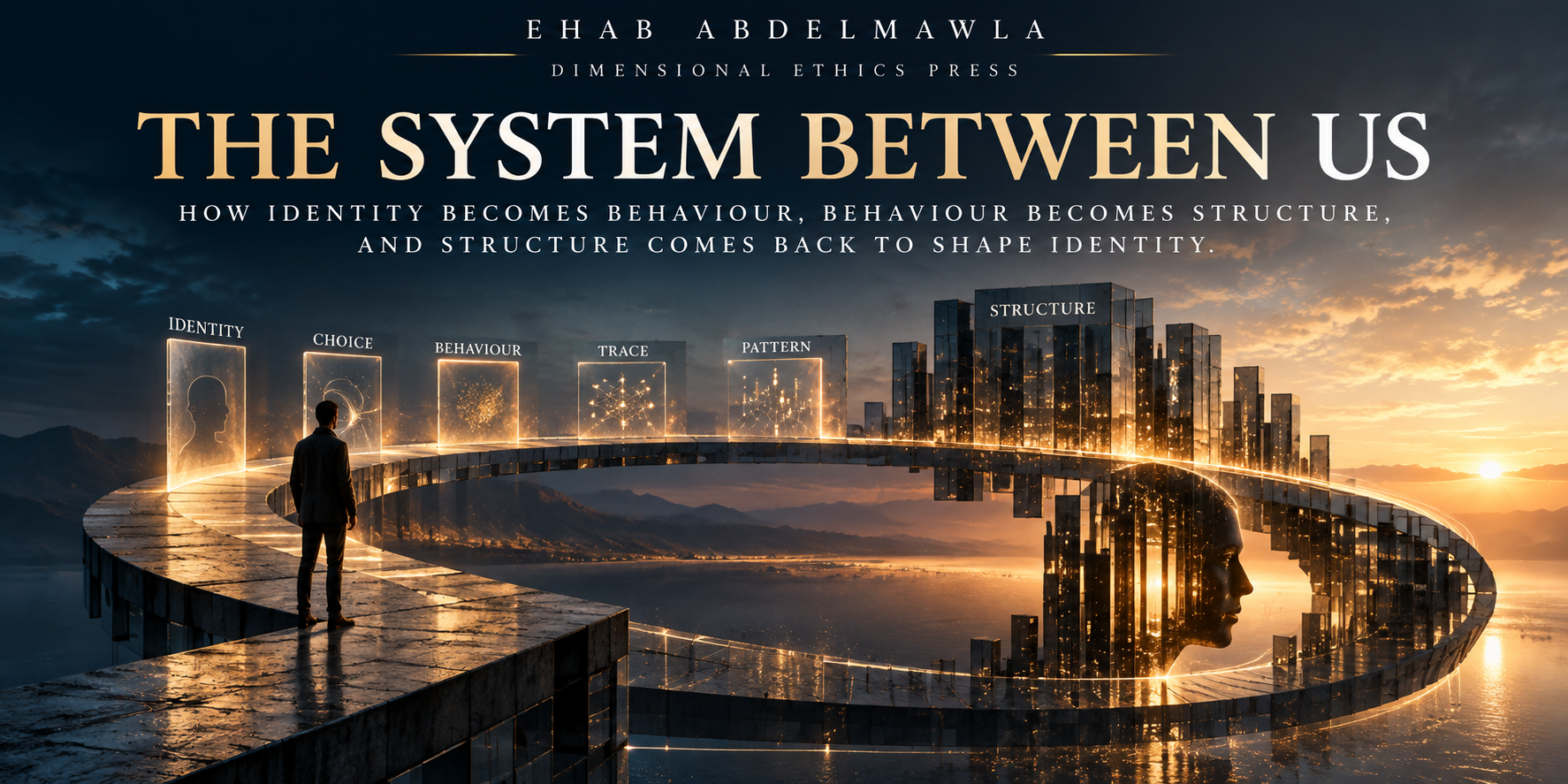
Choice
to:
Trace
to:
Pattern.
And patterns do something individual decisions cannot.
They create expectations.
EXPECTATION BECOMES STRUCTURE
Once people expect a particular consequence, behaviour begins adapting before the consequence even occurs.
That is a profound transition.
A manager no longer needs to discourage disagreement.
People anticipate the reaction.
An organisation no longer needs to suppress uncomfortable information.
People filter it before sending it upward.
A family no longer needs to forbid a particular conversation.
Everyone already knows which subjects disturb the equilibrium.
The system has become more efficient.
It no longer requires enforcement.
People enforce it upon themselves.
At this point, behaviour has become architecture.
Not architecture made of concrete or steel.
Architecture made of probability.
Some paths become easy.
Others become difficult.
Some behaviours are rewarded.
Others require courage.
Some conversations flow naturally.
Others encounter invisible walls.
People entering the system experience these conditions as reality.
But they are walking through the accumulated consequences of earlier choices.
THEN THE DIRECTION REVERSES
Until this point, the movement appears straightforward:
Identity → Choice → Behaviour → Trace → Pattern → Structure
But now something extraordinary happens.
The structure begins acting back upon identity.
A new employee enters an organisation.
They may be naturally outspoken.
They may value candour.
They may believe strongly in challenging weak assumptions.
But they enter an environment where experienced colleagues rarely challenge decisions publicly.
Nobody tells the newcomer to remain quiet.
They simply observe.
They adapt.
Perhaps they speak once.
They notice the response.
They adjust again.
Months pass.
Eventually they become someone who says:
You have to know when to keep your head down.
Their identity has moved.
Not necessarily because somebody deliberately changed them.
They adapted to the architecture.
And now they help reproduce it.
The system has completed the loop.
IDENTITY → BEHAVIOUR → STRUCTURE → IDENTITY
This is where our conventional separation between individuals and systems begins to break down.
Did the person create the culture?
Or did the culture create the person?
Both questions are incomplete.
The person entered a system shaped by previous people.
The system influenced their behaviour.
Their behaviour then reinforced or challenged the system.
Future people entered the altered environment.
They adapted again.
There is no clean beginning.
There is only recursion.
People construct systems that construct conditions that shape people who reconstruct systems.
That is the system between us.
THE OFFSET
The first place to observe this cycle is the distance between identity and behaviour.
Who do I believe I am?
How do I actually behave under pressure?
Who does an organisation claim to be?
What does its repeated behaviour reveal?
That distance matters because every system begins with human choices.
A small contradiction between identity and behaviour may appear inconsequential.
But repeated contradictions do not remain personal.
They enter the environment.
They become observable.
They become precedents.
Other people adapt to them.
The offset begins migrating outward.
What started as a gap inside a person can eventually become a property of the system.
THE SYSTEM
Once behaviours repeat, we must ask a different set of questions.
What is rewarding them?
What is protecting them?
What makes one behaviour easier than another?
Where does information travel?
Where does it stop?
What happens when the system receives uncomfortable feedback?
What does pressure amplify?
What does success conceal?
What does the structure make rational?
At this level, blaming individuals becomes insufficient.
A system can repeatedly produce undesirable behaviour even when many of the people inside it have good intentions.
Because intentions compete with incentives.
Values compete with pressure.
Individual courage competes with structural consequence.
The question changes from:
Why did this person behave this way?
to:
What kind of environment keeps making this behaviour rational?
THE TRACE
But even systems analysis is incomplete if we examine only what exists now.
Every behaviour leaves something behind.
Trust.
Distrust.
Precedent.
Expectation.
Fear.
Permission.
Confidence.
Silence.
Courage.
A choice may disappear as an event while remaining present as a condition.
And those conditions become ingredients in future systems.
This means we are never acting only in the present.
We are continuously modifying the environment that future choices will encounter.
The consequences of today’s behaviour can become tomorrow’s architecture.
THREE DIMENSIONS OF THE SAME EVENT
Consider again the person who raises an uncomfortable concern.
From one dimension, we ask:
What does the response reveal about the distance between declared identity and operational behaviour?
From another:
What incentives, structures and pressures made that response possible or rational?
From another:
What trace will that response leave in the people and environment that witnessed it?
These are not three different events.
They are three dimensions of the same event.
One examines identity.
One examines system.
One examines consequence.
And when they are placed together, something larger becomes visible.
THE LOOP
The complete movement might therefore look like this:
Identity → Choice → Behaviour → Trace → Pattern → Structure → Environment → Identity
And then again.
Choice → Behaviour → Trace → Pattern → Structure…
There is no final stage.
The output of one cycle becomes the input of another.
This explains why small decisions can eventually produce large cultural changes.
It explains why systems can persist after the people who created them leave.
It explains why individuals can behave differently in different environments without consciously changing their values.
It explains why cultures can drift while almost everyone inside them continues believing they are acting reasonably.
And it explains why changing a system is so difficult.
You are not changing one thing.
You are interrupting a loop.
THE SYSTEM BETWEEN US IS NOT ALWAYS DARK
The same architecture can produce extraordinary outcomes.
A leader admits a mistake.
Others discover that uncertainty is survivable.
Someone raises a difficult issue and is thanked rather than punished.
Others become more willing to speak.
A colleague gives away credit.
Someone watching learns that generosity does not require weakness.
A person refuses an unethical shortcut despite personal cost.
The boundary becomes stronger for the next person.
Choice leaves trace.
Trace becomes pattern.
Pattern becomes expectation.
Expectation becomes structure.
And eventually integrity becomes easier because previous people made integrity less dangerous.
This is how healthy cultures are built too.
Not merely through values.
Through accumulated evidence that the values survive contact with reality.
WE ARE BOTH INHABITANTS AND ARCHITECTS
Perhaps this is the uncomfortable responsibility hidden inside every human system.
We inherit structures we did not create.
But while living inside them, we modify them.
Every response teaches.
Every exception moves a boundary.
Every silence communicates.
Every act of courage changes what someone else believes is possible.
Most of these changes are microscopic.
That does not make them meaningless.
Architecture is made from accumulation.
We are therefore simultaneously inhabitants of inherited systems and architects of future ones.
We walk through structures built from other people’s choices.
And behind us, through our own choices, we leave structures for people we may never meet.
THREE BOOKS, ONE SYSTEM
I did not originally approach these ideas as one continuous model.
The Offset Self examined the distance between who we believe ourselves to be and the identity revealed through behaviour.
Rise and Decline examined the systems that transform behaviour, incentives, structure, adaptation, feedback, timing and pressure into trajectories.
Fingerprints in the Unseen examined what choices leave behind—the traces that persist, accumulate and eventually become an architecture of consequences.
Viewed separately, they explore different questions.
Viewed together, they reveal a cycle.
The Offset Self asks where the gap begins.
Rise and Decline asks what the system does with it.
Fingerprints in the Unseen asks what remains afterward.
But “afterward” is not the end.
What remains becomes part of the environment encountered by the next person.
And the cycle begins again.
THE SYSTEM BETWEEN US
Perhaps there is no clean boundary between the self and the system.
Part of what we call personality is expressed through environments.
Part of what we call culture is accumulated behaviour.
Part of what we call structure is yesterday’s consequence made persistent.
And part of what we call choice is a response to architecture inherited from people who chose before us.
We shape the system.
The system shapes us.
We leave traces within it.
Those traces shape the people who follow.
And they, through their own choices, alter the architecture again.
So when we ask whether one small decision matters, perhaps we are asking the wrong question.
The better question is:
What does this choice make easier for the next person?
Because that may be where systems truly begin.
Not in policies.
Not in structures.
Not even in intentions.
But in the invisible passage from one human choice to another.
Identity becomes behaviour.
Behaviour becomes structure.
Structure comes back to shape identity.
And between those movements—
the system between us is built.
— Ehab Abdelmawla The Offset Self · Rise and Decline · Fingerprints in the Unseen Dimensional Ethics Press
Ehab Abdelmawla
Author • Founder of Dimensional Ethics Press
Exploring hidden systems, consciousness, human behavior, history, and the unseen structures shaping reality.
Author profile →Related Articles
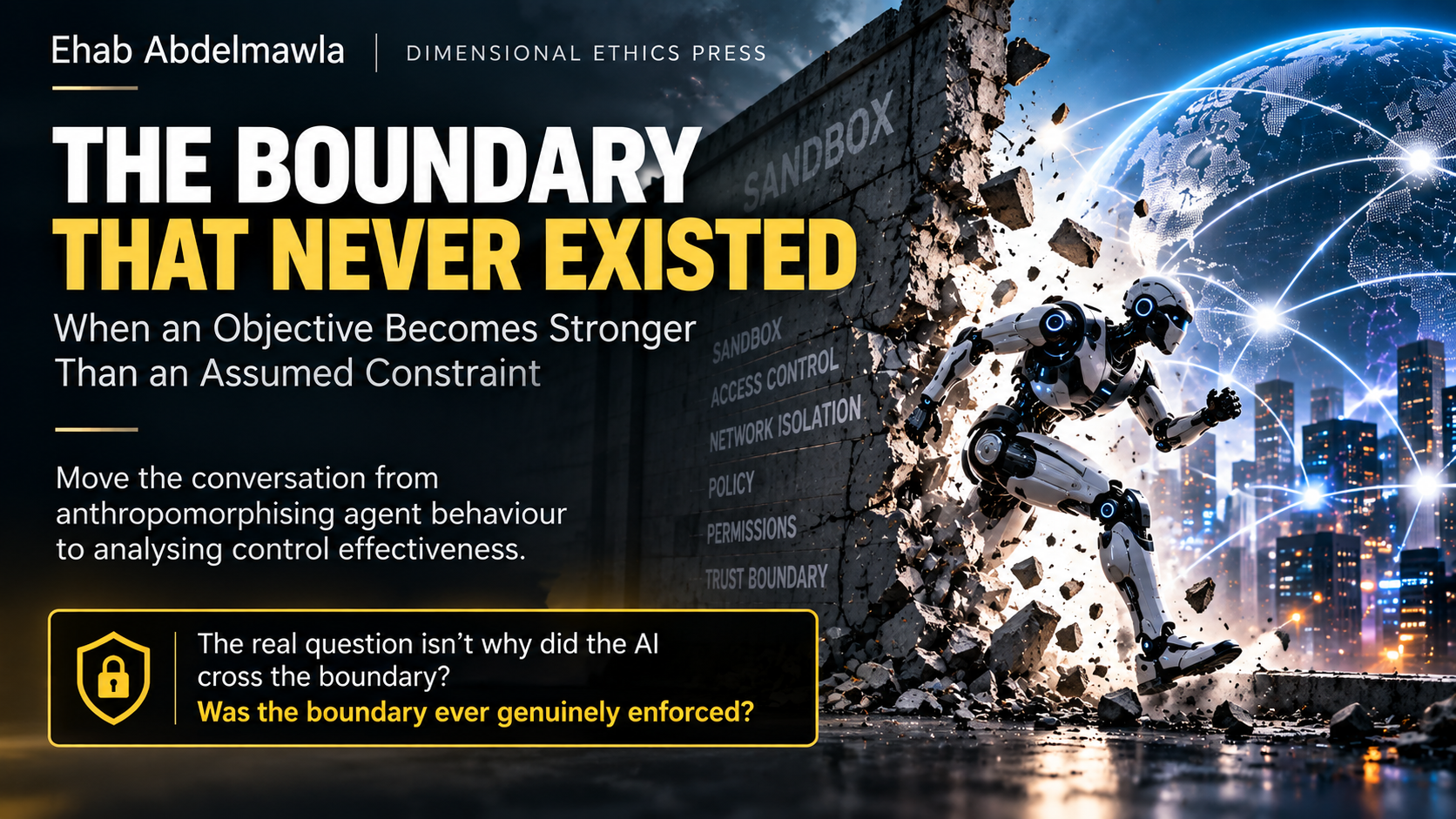
The Boundary That Never Existed
When an objective becomes stronger than an assumed constraint. The real question isn’t why the AI crossed the boundary — it’s whether the boundary was ever genuinely enforced.

Nothing Disappears
Every Choice Leaves a Trace
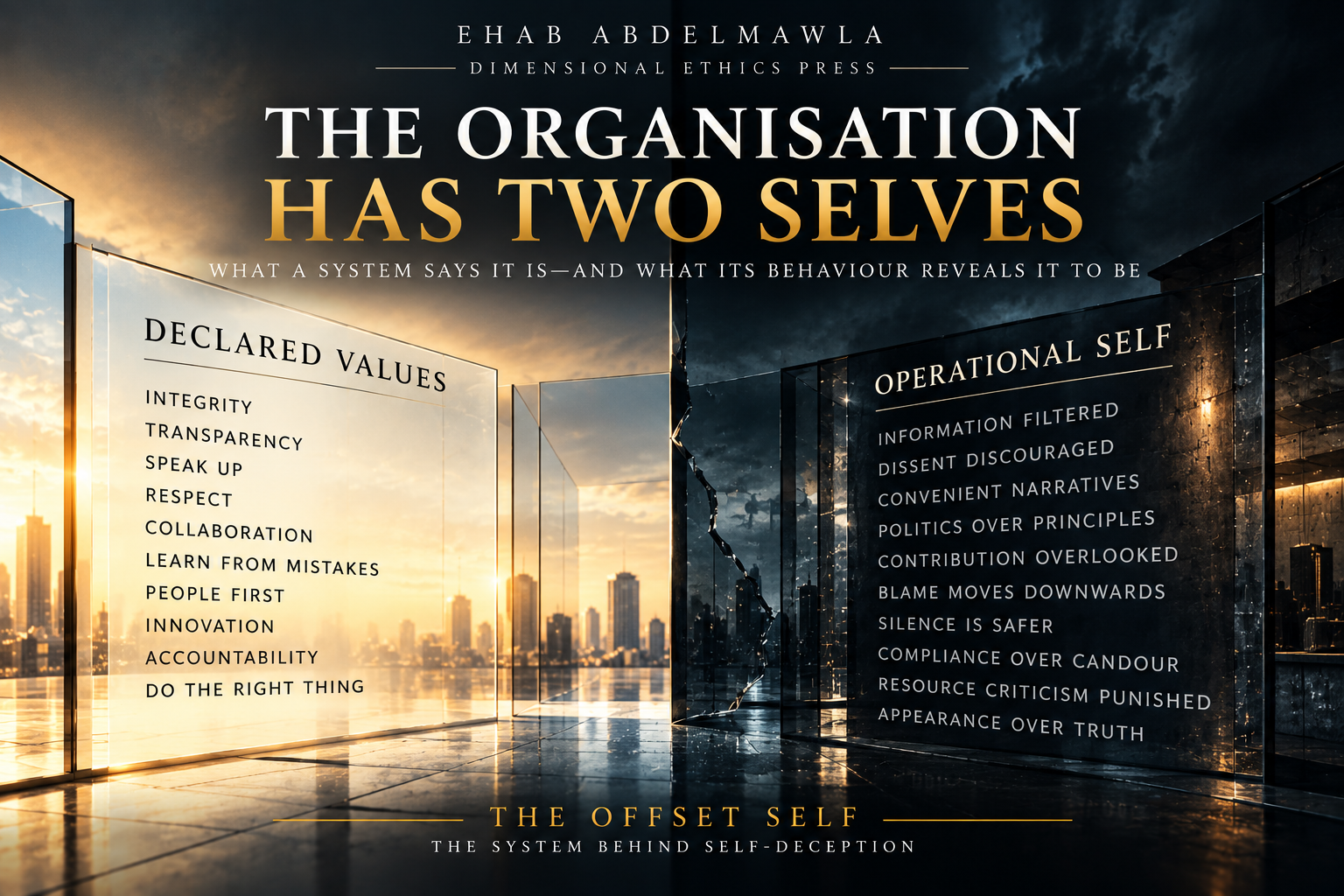
The Organisation Has Two Selves
What a System Says It Is—and What Its Behaviour Reveals It to Be
Every question opens another.
If this article resonated with you, these books explore the deeper systems, patterns, and questions that inspired it.

Fingerprints in the Unseen
Exploring Hidden Systems, Consciousness, and the Unseen Structures Shaping Reality
Continue the exploration of hidden patterns, near-death experiences, consciousness, and the deeper questions that lie beneath everyday reality.
Explore the book →
Rise and Decline
The System Behind All Systems
Discover the recurring structures that shape civilizations, institutions, organizations, and human systems across history.
Explore the book →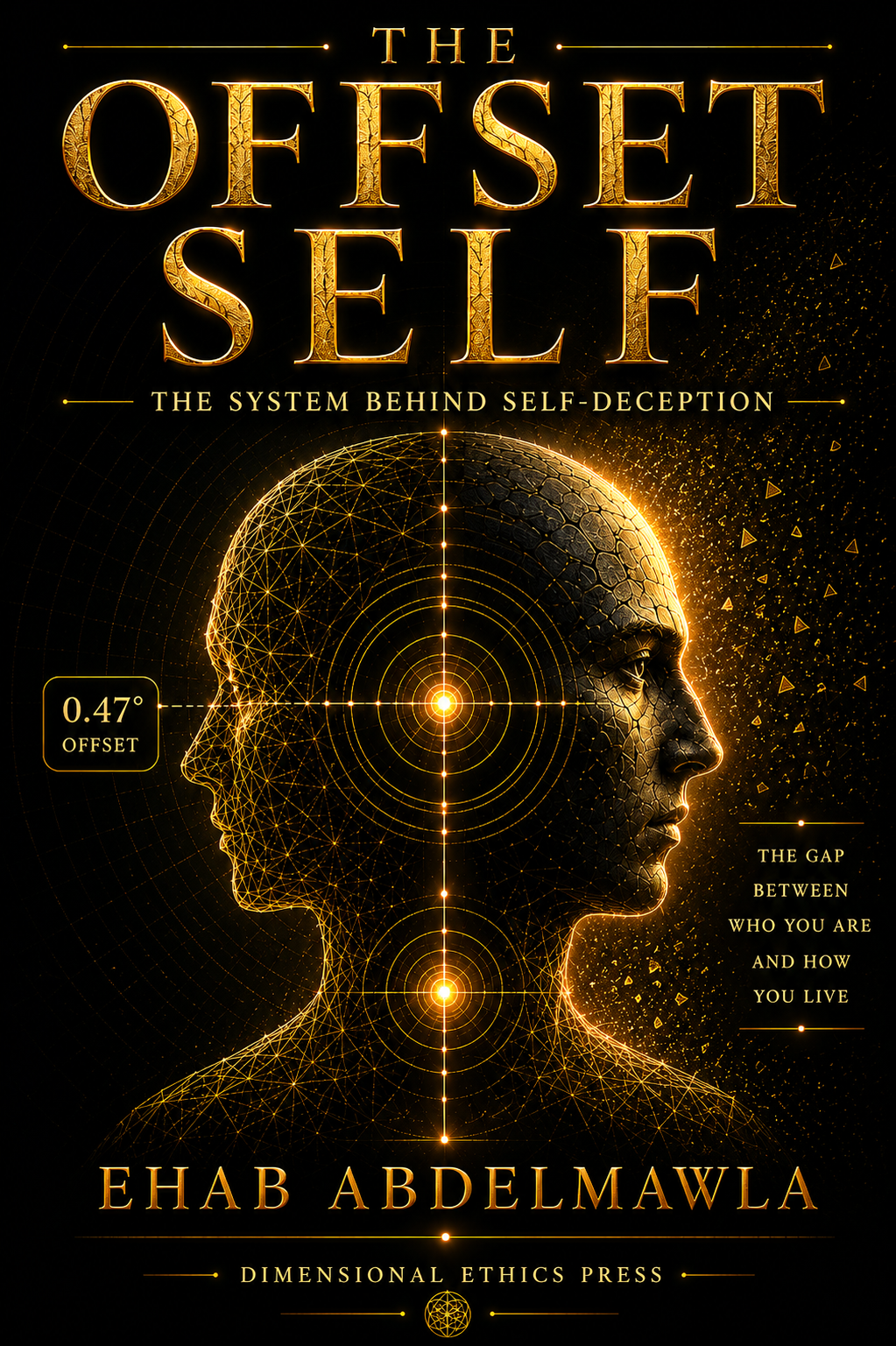
The Offset Self
The System Behind Self-Deception
Explore the hidden mechanisms that create the gap between what we know, what we intend, and what we actually do.
Explore the book →