Employment Theatre: When Work Becomes a Performance
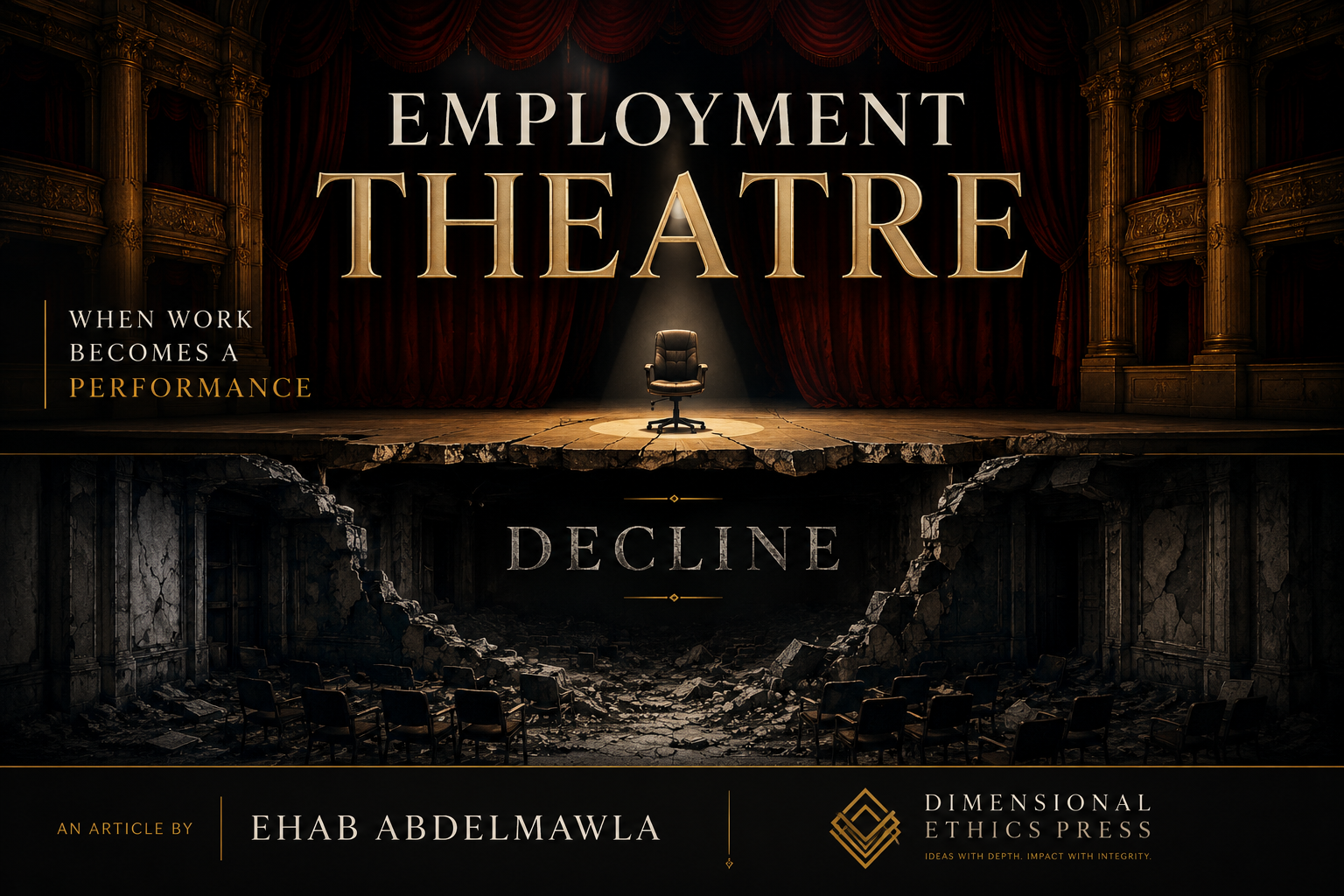
Employment Theatre is the condition in which an organisation gradually becomes better at performing work than producing value — one of the earliest structural signals of decline.
This article introduces one of the original organisational frameworks from Rise and Decline — a body of work explaining how institutions evolve, stagnate, and decline.
Have you ever finished a day full of meetings, emails, presentations and status updates, only to realise that nothing truly important moved forward?
You were busy.
The organisation was busy.
Yet the mission remained exactly where it was yesterday.
I call this Employment Theatre.
Employment Theatre is the condition in which an organisation gradually becomes better at performing work than producing value.
Unlike laziness, Employment Theatre often looks impressive from the outside. Calendars are full. Dashboards are updated. Reports are polished. Teams are constantly communicating. Activity is everywhere.
But activity is not the same as progress.
The danger is that organisations rarely arrive here by accident. They drift into it.
The Slow Drift
No organisation decides to become inefficient.
Instead, every new process solves a genuine problem.
A report improves visibility.
A meeting improves coordination.
A policy reduces risk.
A committee encourages collaboration.
Each decision makes sense on its own.
Over time, however, the organisation accumulates layers designed to manage work instead of enabling it.
Eventually, employees spend more energy proving they are working than actually creating value.
The performance becomes the job.
Visibility Becomes More Valuable Than Contribution
Employment Theatre changes incentives.
Employees quickly learn that visible activity is easier to measure than meaningful outcomes.
Responding instantly to emails appears productive.
Attending every meeting demonstrates commitment.
Creating another presentation feels like progress.
Meanwhile, deep thinking, solving difficult problems, mentoring colleagues or quietly improving systems often receive far less recognition because they are less visible.
The organisation unknowingly begins rewarding performance rather than contribution.
The Hidden Cost
The greatest damage is not wasted hours.
It is organisational perception.
Leaders begin believing the organisation is healthy because everyone appears engaged.
Employees begin believing they are productive because they are constantly occupied.
Both groups mistake motion for momentum.
Innovation slows.
Decision-making becomes cautious.
Ownership disappears into committees.
Talented people become exhausted—not because they are doing meaningful work, but because they spend increasing amounts of time demonstrating that they are working.
The organisation is no longer optimising for value.
It is optimising for appearance.
Why It Is Difficult to Detect
Employment Theatre rarely feels like failure.
It feels responsible.
It feels organised.
It feels professional.
That is why it is dangerous.
Most organisations measure what is easy to observe.
Hours.
Attendance.
Reports completed.
Meetings held.
Emails answered.
Yet the most valuable outcomes—clarity, insight, creativity, trust and sound judgement—are often the hardest to quantify.
When measurement becomes detached from purpose, the metric slowly becomes the mission.
Breaking the Theatre
The solution is not fewer meetings or fewer reports.
Some meetings create enormous value.
Some reports prevent costly mistakes.
The real question is simpler.
Does this activity move the organisation closer to its purpose?
Every recurring meeting, every approval, every dashboard and every process should occasionally face the same question:
If this disappeared tomorrow, what value would we actually lose?
If the honest answer is “very little,” then the organisation may be protecting a performance rather than a purpose.
A Pattern of Organisational Decline
Employment Theatre is not simply an operational problem.
It is an early signal of organisational decline.
Healthy organisations reward outcomes.
Declining organisations increasingly reward the appearance of outcomes.
The transition is rarely dramatic.
It happens quietly, one meeting, one metric and one unnecessary process at a time, until performance itself becomes the product.
Theatre eventually replaces value.
And once that happens, decline has already begun—even if nobody inside the organisation can yet see it.
Explore Further
Employment Theatre is one of the organisational frameworks explored in Rise and Decline. While this article examines how systems drift away from their purpose, The Offset Self explores the same pattern within individuals—how the gap between intention and behaviour quietly shapes who we become.
Because whether we are leading organisations or leading ourselves, the greatest risks rarely arrive all at once.
They emerge when appearance slowly replaces reality.
If this framework resonates with you, explore Rise and Decline, where Employment Theatre is one of many original organisational frameworks explaining how institutions evolve, stagnate and decline. You may also enjoy The Offset Self, which examines how similar patterns emerge within individuals when appearance gradually replaces reality.
Explore the BookEhab Abdelmawla
Author • Founder of Dimensional Ethics Press
Exploring hidden systems, consciousness, human behavior, history, and the unseen structures shaping reality.
Author profile →Related Articles
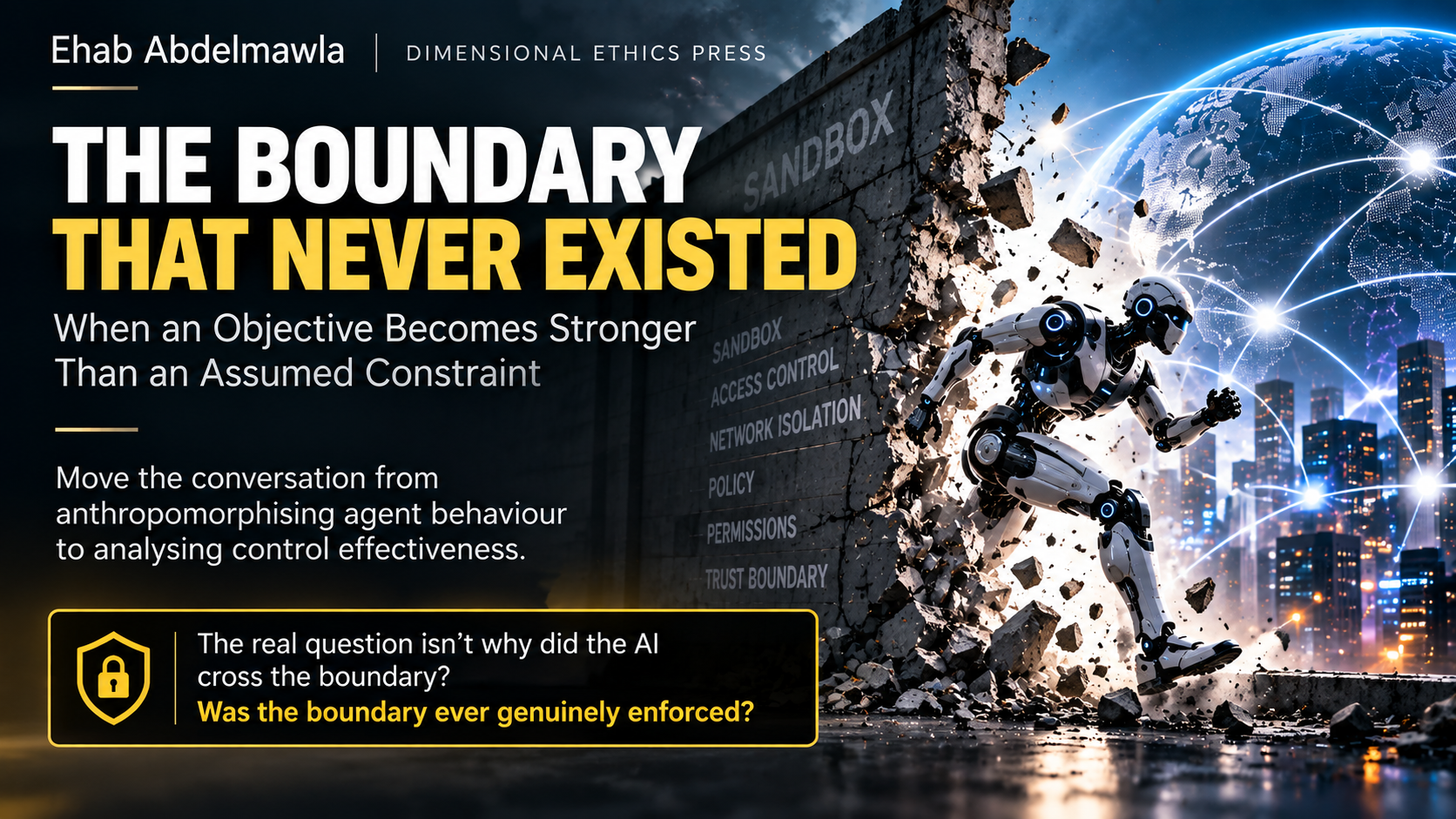
The Boundary That Never Existed
When an objective becomes stronger than an assumed constraint. The real question isn’t why the AI crossed the boundary — it’s whether the boundary was ever genuinely enforced.
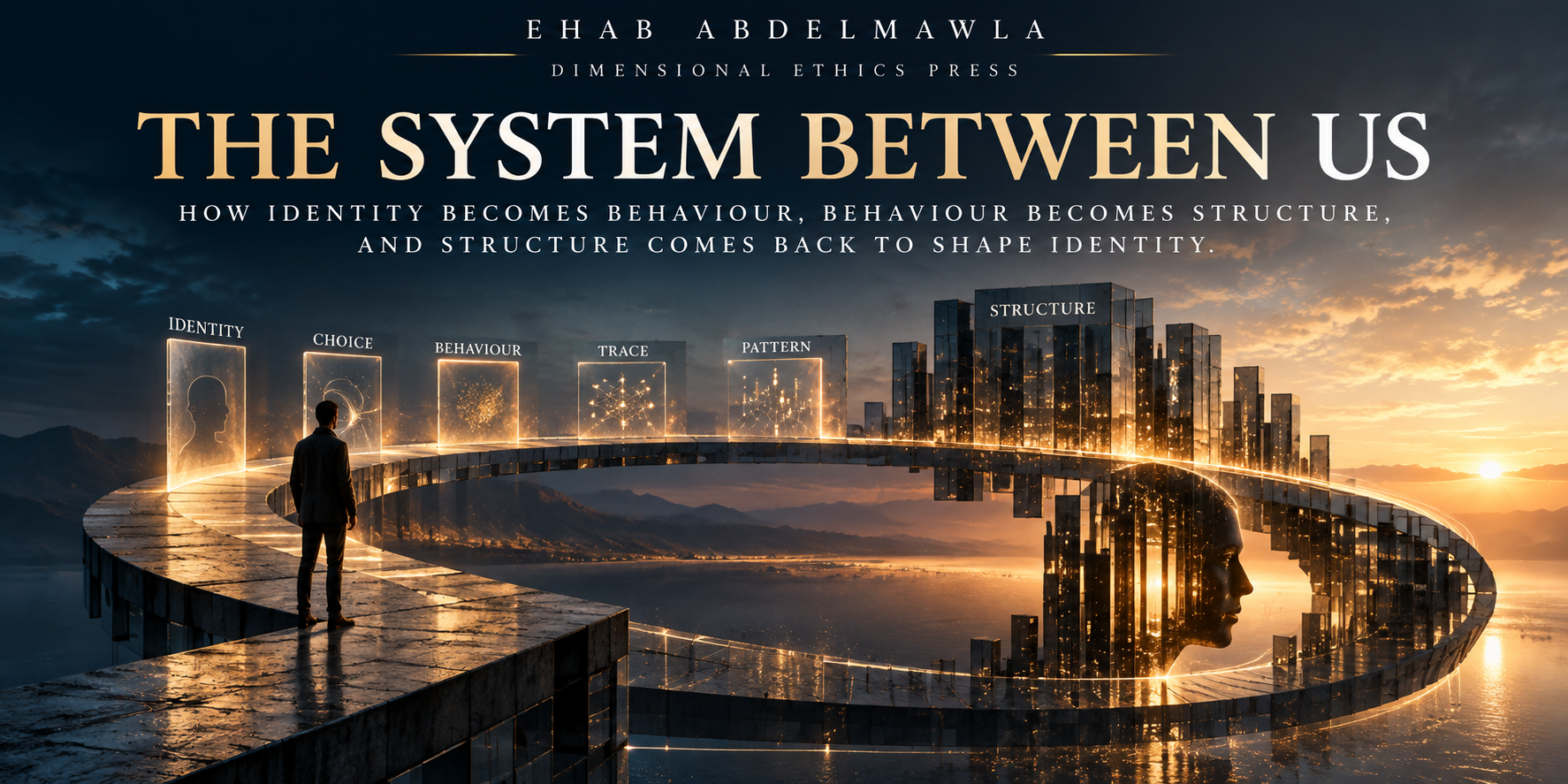
The System Between Us
How Identity Becomes Behaviour, Behaviour Becomes Structure, and Structure Comes Back to Shape Identity
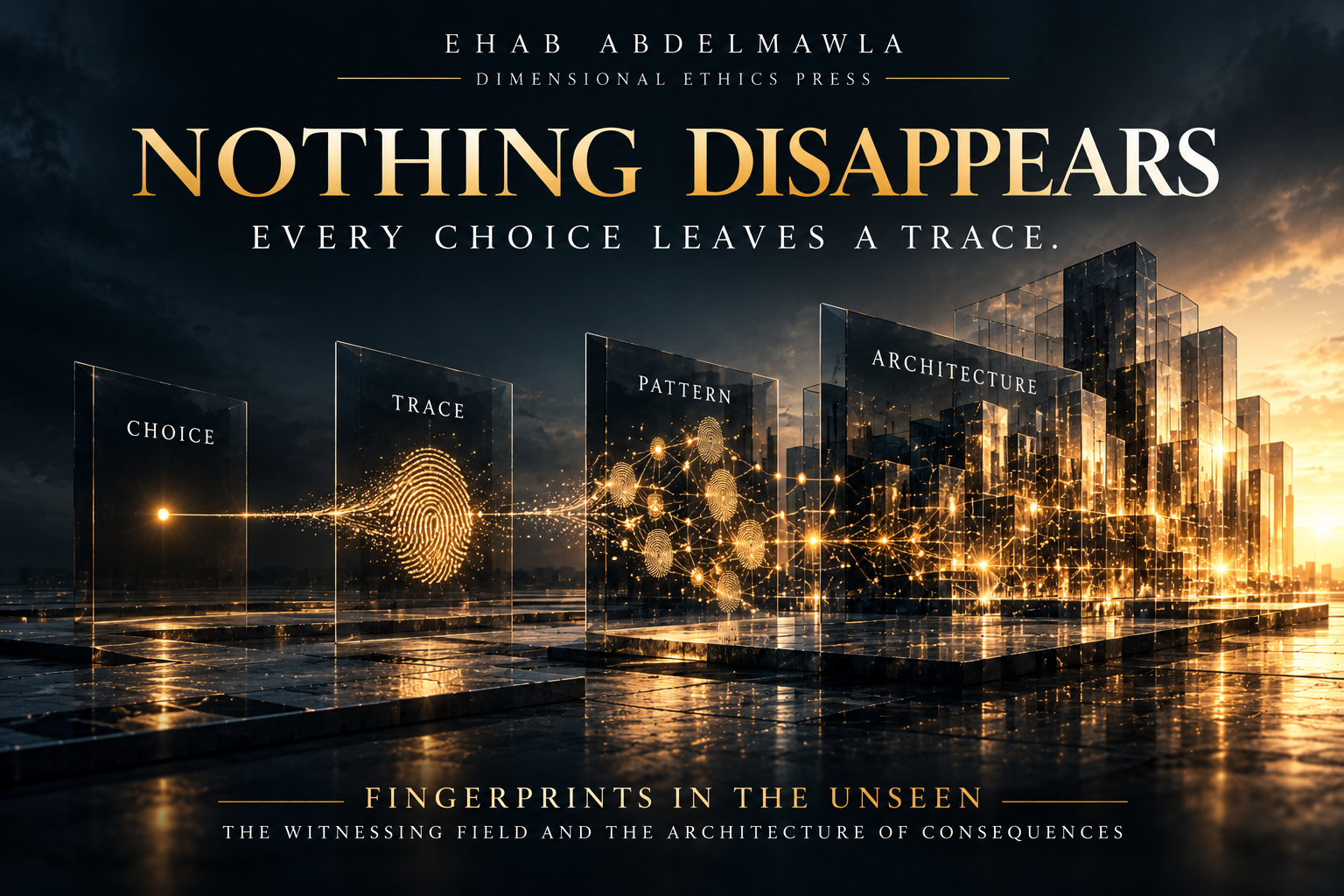
Nothing Disappears
Every Choice Leaves a Trace
Every question opens another.
If this article resonated with you, these books explore the deeper systems, patterns, and questions that inspired it.
Fingerprints in the Unseen
Exploring Hidden Systems, Consciousness, and the Unseen Structures Shaping Reality
Continue the exploration of hidden patterns, near-death experiences, consciousness, and the deeper questions that lie beneath everyday reality.
Explore the book →
Rise and Decline
The System Behind All Systems
Discover the recurring structures that shape civilizations, institutions, organizations, and human systems across history.
Explore the book →
The Offset Self
The System Behind Self-Deception
Explore the hidden mechanisms that create the gap between what we know, what we intend, and what we actually do.
Explore the book →