The Weight of Unfinished Responsibilities
A reflection from the Fingerprints in the Unseen series exploring why the unseen appears to measure unfinished responsibilities rather than material value.

Fingerprints in the Unseen
Across many accounts collected in the Fingerprints in the Unseen library, ordinary moments often become extraordinary teachers. One account tells of a man who survived a catastrophic accident after spending weeks in a coma. During his near-death experience, he described what he understood as a profound review of his life. Surprisingly, one of the defining moments was not a great moral failure, but a simple kitchen tray that had accidentally remained in his vehicle after helping someone move years earlier. Convinced that it was of little value, that its owner was financially comfortable, and that returning it after so much time would only be embarrassing, he quietly left the matter unresolved. Yet within his experience, that forgotten object became a symbol of something much greater: not the value of the tray itself, but the weight of an unfinished responsibility.
Whether one understands such experiences literally, symbolically, or psychologically, the ethical question they raise deserves careful reflection.
⸻
We Measure Value Differently
Human beings naturally measure importance by scale.
How much money was involved?
How serious was the damage?
How valuable was the object?
How badly was someone affected?
The unseen seems to ask an entirely different question.
Was the responsibility completed?
That single question changes everything.
The object may have had little financial value.
The owner may have been wealthy.
The loss may have caused no visible hardship.
None of those facts appear to matter.
Because the issue was never the object.
The issue was that something belonging to another person remained unresolved.
⸻
Intention Does Not Always Complete Responsibility
There is something profoundly human about unfinished obligations.
Most are not born from malice.
They begin with good intentions.
“I’ll return it tomorrow.”
“I’ll pay them back next week.”
“I’ll apologise when the time feels right.”
“I’ll get around to it.”
Life moves forward.
Time passes.
Embarrassment quietly replaces intention.
Eventually, we convince ourselves that the matter has become too small to matter.
Perhaps good intentions explain our actions.
But explanation is not the same as completion.
Intentions belong to the heart.
Responsibilities belong to relationships.
The unseen appears to distinguish between the two.
⸻
Ownership Is Not Measured by Need
One of the most common justifications we make is surprisingly simple.
“They can afford it.”
“They probably forgot.”
“It wasn’t important to them.”
Perhaps.
But those arguments answer a different question.
They speak about need.
The unseen appears to speak about ownership.
Integrity is not measured by how much another person can afford to lose.
It is measured by whether we honoured what rightfully belonged to them.
Justice does not become smaller because the object becomes smaller.
⸻
The Fingerprint Hidden Beneath the Story
The more these accounts are examined, the clearer one pattern becomes.
The unseen does not seem interested in magnifying small objects.
It magnifies unfinished responsibilities.
That distinction matters.
The object is only the visible expression of something invisible.
An unresolved relationship.
An unfinished obligation.
A responsibility waiting to be completed.
Perhaps this is one of the recurring fingerprints of the unseen.
Reality does not appear to organise itself around wealth, status, recognition, or material importance.
Instead, it continually points toward quieter foundations.
Truth.
Integrity.
Justice.
Completion.
Not spectacular moments.
Ordinary faithfulness.
⸻
A Different Moral Geometry
Modern life teaches us to think in terms of magnitude.
Great achievements.
Great failures.
Great sacrifices.
Great mistakes.
The unseen suggests another geometry entirely.
Not the size of an action.
The completeness of it.
A small kindness may carry greater weight than public recognition.
A forgotten obligation may remain unfinished long after its monetary value has disappeared.
An object may lose its price while retaining its moral meaning.
Perhaps this is why conscience rarely asks,
“How much was it worth?”
Instead, it asks,
“Is it finished?”
⸻
Every Life Has Its Own Forgotten Tray
The greatest mistake would be to believe this principle applies only to someone else’s story.
Every life contains its own forgotten tray.
Sometimes it is an object.
More often, it is something far less visible.
Gratitude that was never expressed.
Forgiveness that was postponed.
A debt quietly ignored.
A promise left unfinished.
Words that should have been spoken years ago.
The question is not whether these things are large or small.
The question is whether they remain incomplete.
⸻
Reflection
Perhaps one of the hidden laws of the unseen is this:
The unseen does not magnify small objects. It magnifies unfinished responsibilities.
If that is true, integrity is measured less by the scale of our actions than by our willingness to complete what is ours to complete.
The forgotten object becomes more than an object.
It becomes a mirror.
Not asking,
“How valuable was it?”
But asking something far more difficult:
What have I left unfinished simply because I convinced myself it was too small to matter?
Ehab Abdelmawla
Author • Founder of Dimensional Ethics Press
Exploring hidden systems, consciousness, human behavior, history, and the unseen structures shaping reality.
Author profile →Related Articles

The System Between Us
How Identity Becomes Behaviour, Behaviour Becomes Structure, and Structure Comes Back to Shape Identity

Nothing Disappears
Every Choice Leaves a Trace
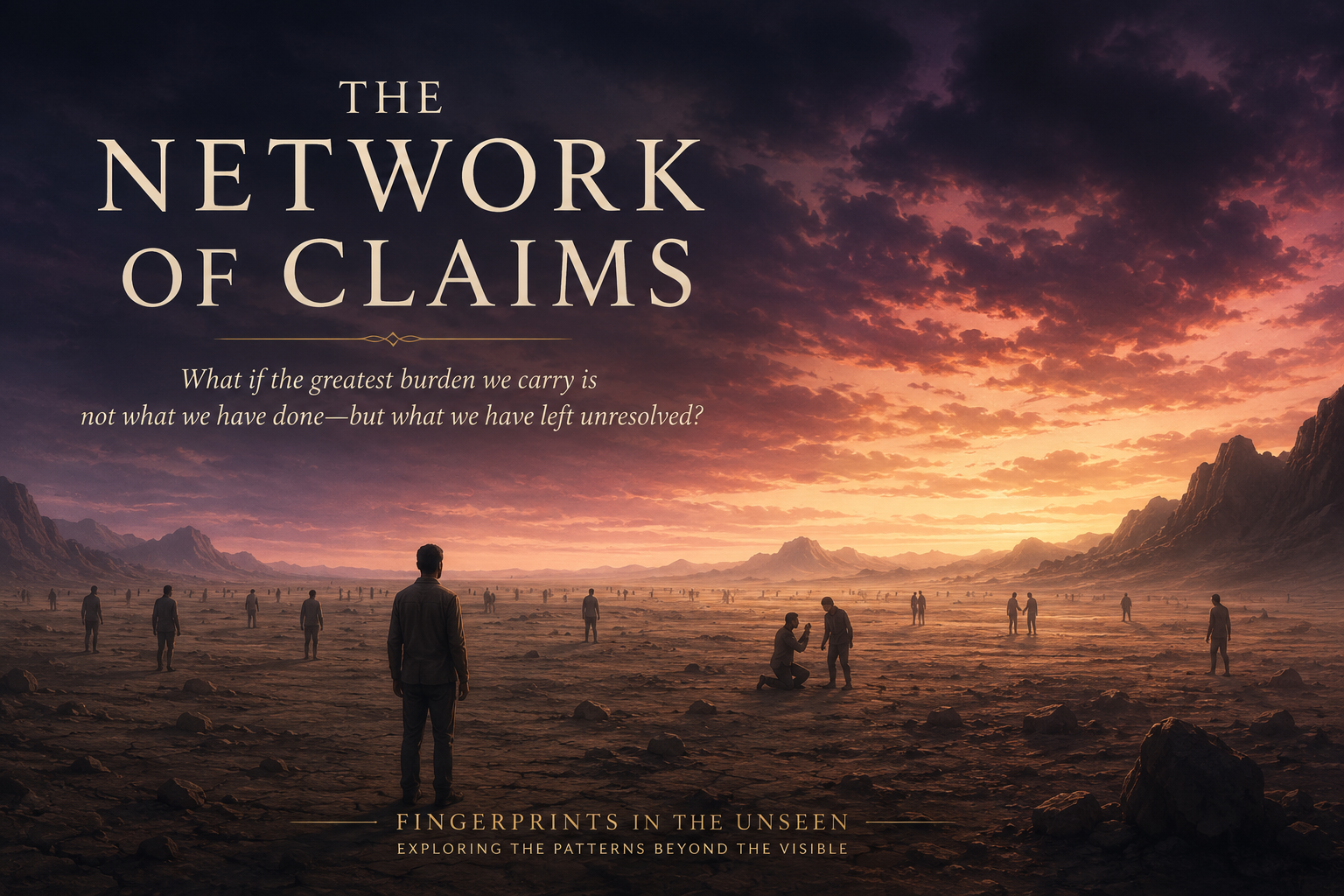
The Network of Claims
What if the greatest burden we carry is not what we have done—but what we have left unresolved?
Every question opens another.
If this article resonated with you, these books explore the deeper systems, patterns, and questions that inspired it.

Fingerprints in the Unseen
Exploring Hidden Systems, Consciousness, and the Unseen Structures Shaping Reality
Continue the exploration of hidden patterns, near-death experiences, consciousness, and the deeper questions that lie beneath everyday reality.
Explore the book →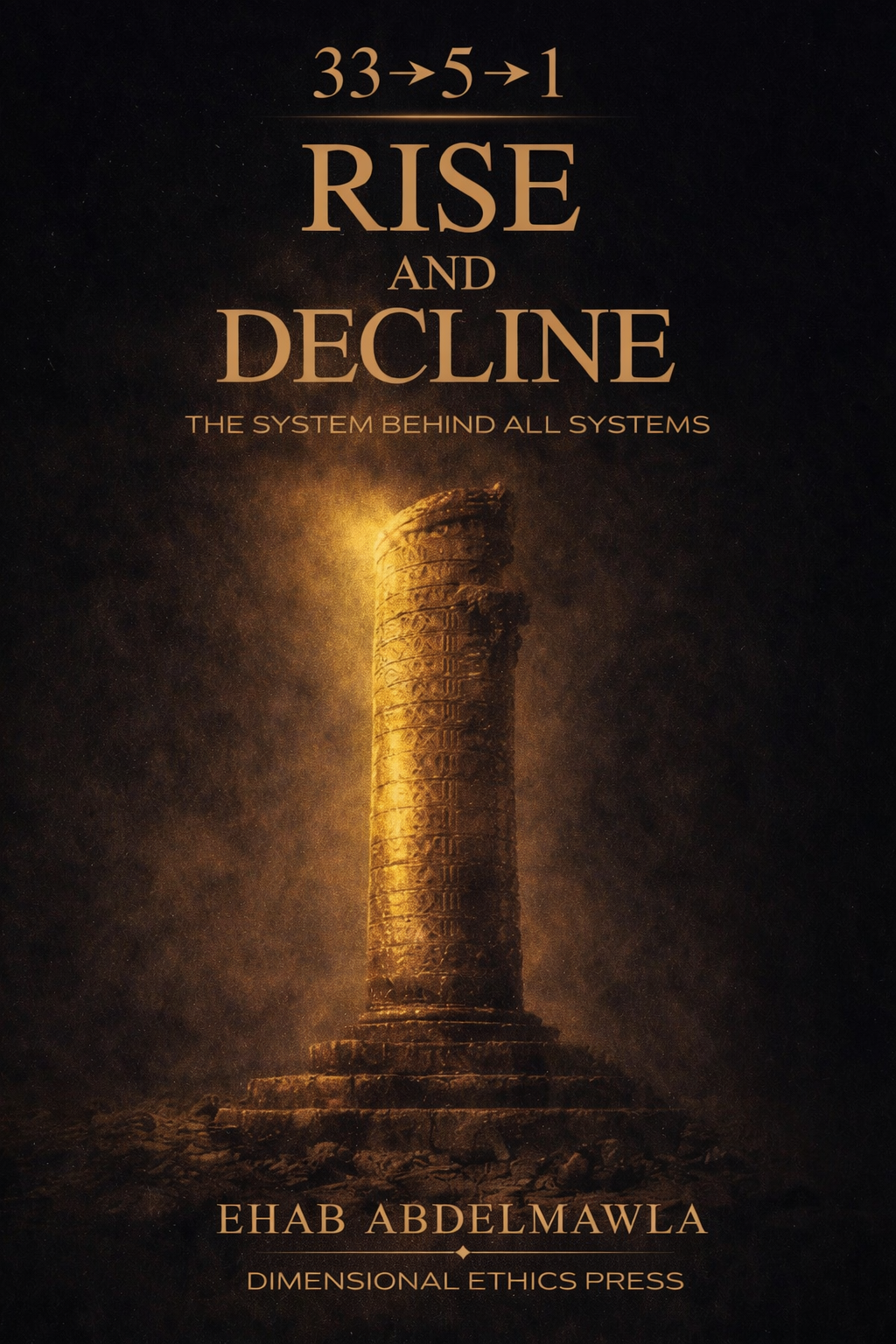
Rise and Decline
The System Behind All Systems
Discover the recurring structures that shape civilizations, institutions, organizations, and human systems across history.
Explore the book →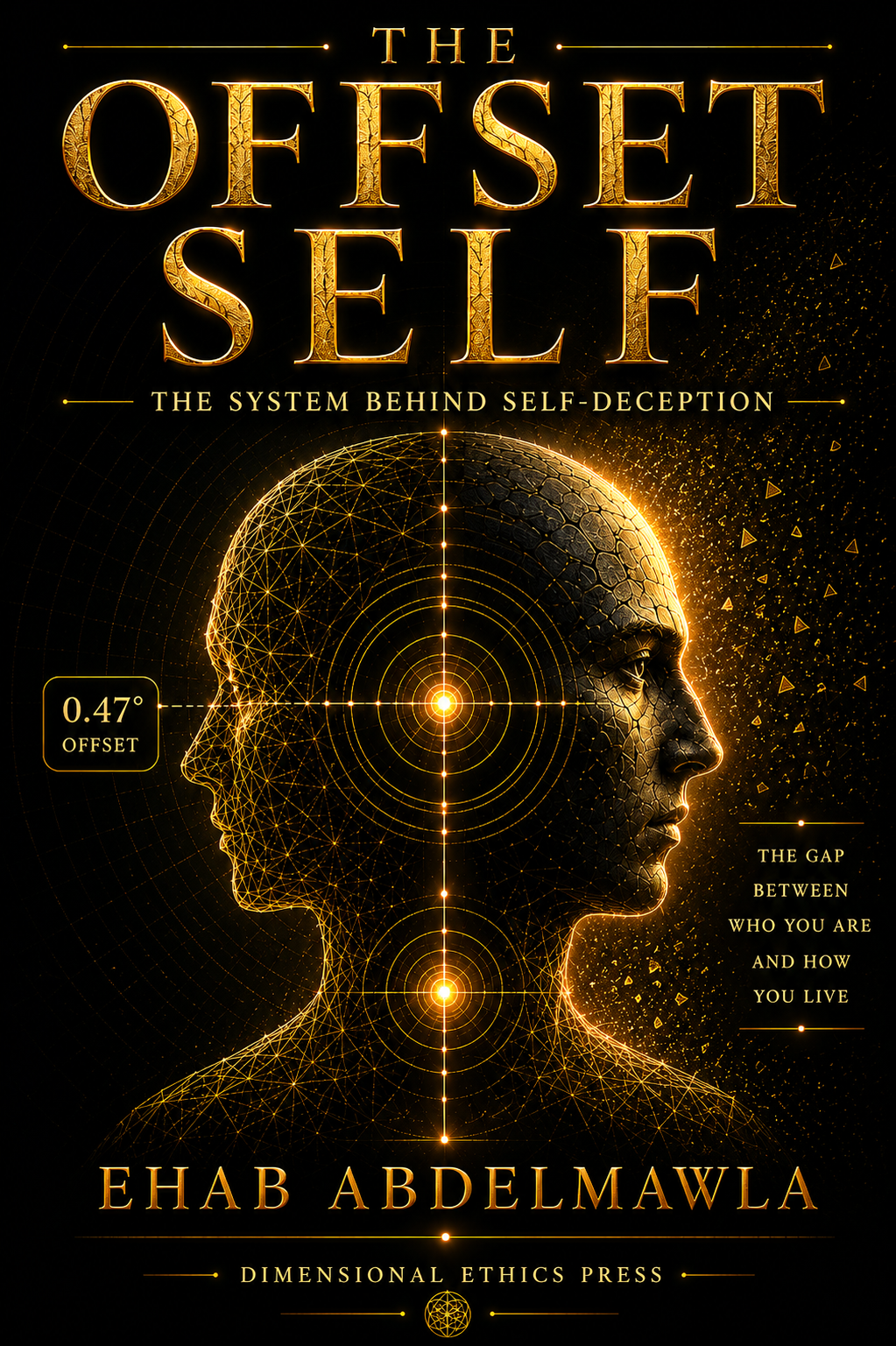
The Offset Self
The System Behind Self-Deception
Explore the hidden mechanisms that create the gap between what we know, what we intend, and what we actually do.
Explore the book →