WHEN THE LAWS OF POWER MEET THE LAWS OF THE UNSEEN
A Philosophical Coincidence I Never Expected
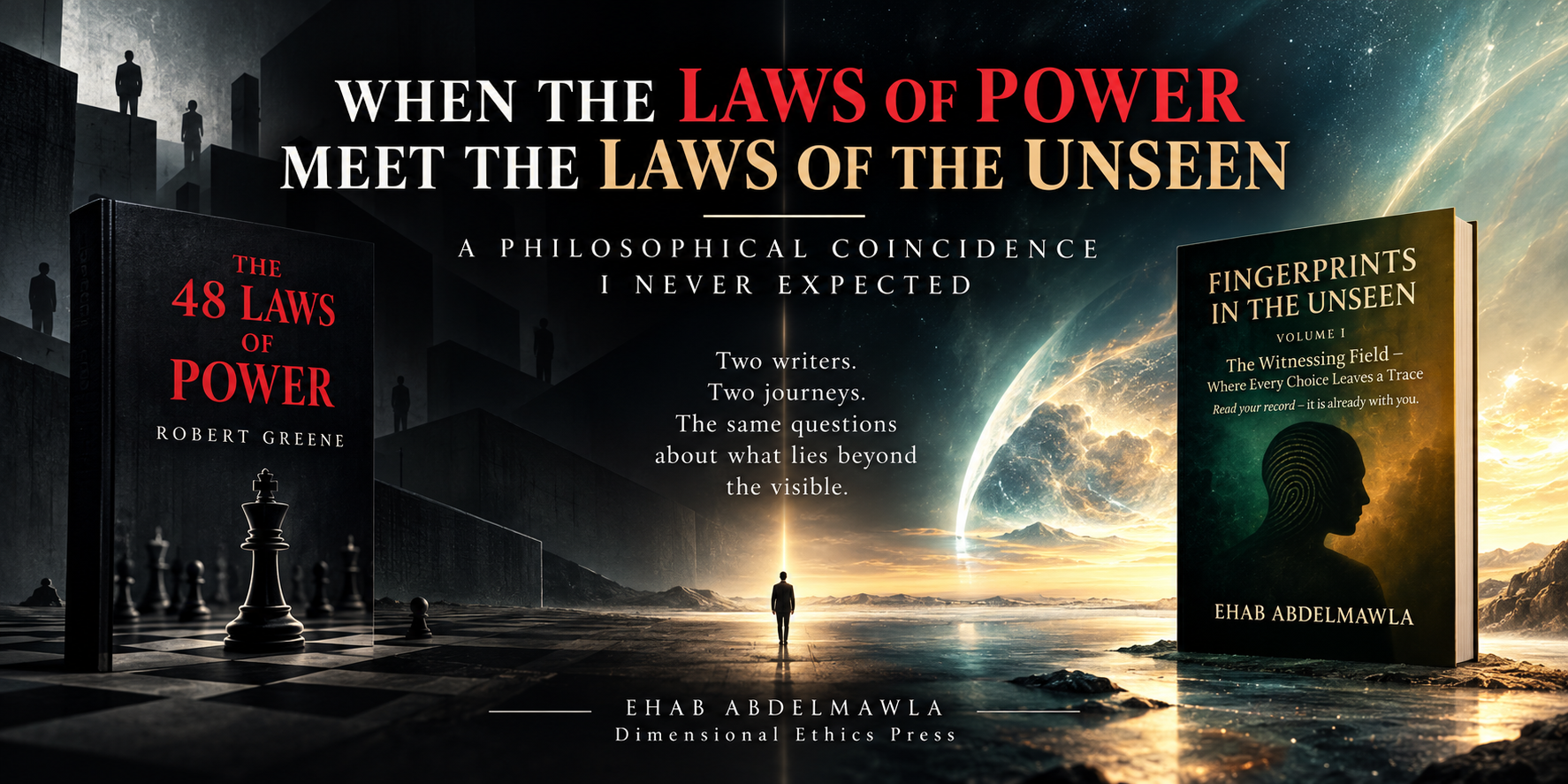
What happens when the philosophy you once questioned begins exploring the very questions that led you to challenge it?
In early 2025, while developing Fingerprints in the Unseen — The Witnessing Field, I found myself reflecting on the philosophy of power.
Not power as a political institution or an organisational hierarchy, but power as a philosophy of human behaviour.
The pursuit of influence.
The manipulation of circumstances.
The ability to control outcomes, conceal intentions, and gain advantages over others.
I was particularly interested in the thinking popularised by Robert Greene in The 48 Laws of Power.
I understood its appeal.
Power is observable. Its effects can be measured. Its strategies can be studied, repeated, and refined.
But something about this way of understanding human existence troubled me.
What happens after the victory?
What happens to the person who wins?
What happens to those who lose?
And what happens to the consequences that neither party can see?
Those questions eventually became part of the philosophical foundation of the Laws of the Unseen, an integral component of the Witnessing Field framework.
I did not know that almost a year after my book’s publication, I would encounter an unexpected development involving the very author whose approach to power had helped provoke those questions.
The Question I Asked in Early 2025
During the development of Fingerprints in the Unseen, I wanted to establish a distinction before introducing the first Law of the Unseen.
The distinction was between two fundamentally different ways of examining human behaviour.
One studies how people gain influence over others.
The other investigates what their actions leave behind.
One is concerned with strategic outcomes.
The other is concerned with consequences that may survive those outcomes.
On page 128 of the published book, immediately before introducing the Laws of the Unseen, I wrote:
A Word to Those Who Study Power
Every age produces its handbooks of power: guides to survival through control, concealment, and ambition. These laws are strategies, not moralities, x-rays of the contest of wills. They reveal how to manoeuvre in the arena of influence, how to endure in the struggle for advantage. Yet what power secures in the moment, it cannot preserve in the soul.
The Laws of the Unseen belong to a different horizon.
They trace not how to win, but how to remain whole; not influence over others, but consequence within the self. If the laws of power expose the mechanics of control, the laws of the unseen unveil the architecture of consequence - that which endures beyond ambition, outlives rivalry, and follows the soul across thresholds.
This is not opposition, but another register.
Power speaks to the contests of the present; the unseen speaks to the continuity of being.
One teaches survival of the body in the arena; the other teaches survival of the soul in eternity.
— Fingerprints in the Unseen — The Witnessing Field, page 128 Published 23 November 2025
This was not intended as a personal criticism of Greene.
It was a philosophical disagreement with the idea that understanding how to exercise power provides a sufficient understanding of human existence.
And the distinction in that passage matters.
“This is not opposition, but another register.”
I was not attempting to replace the laws of power.
I was questioning whether the mechanics of control could ever provide a complete account of human consequences.
A person may win an encounter while remaining completely unaware of what that victory has created.
An act of manipulation may succeed.
A strategy may achieve its objective.
An adversary may be defeated.
But does the success of the action tell us anything about the totality of its consequences?
Not necessarily.
And that distinction became important to the framework I was developing.
The Laws of the Unseen
The Laws of the Unseen were never intended to be another collection of strategies for controlling human behaviour.
They belong to the broader Witnessing Field framework, which explores consciousness, observation, identity, and the possibility that our immediate perception reveals only part of the relationships through which human experience unfolds.
The framework begins with a fundamental distinction:
What we can observe is not necessarily everything that exists.
This does not require us to assume that every unseen phenomenon is supernatural.
Much of ordinary reality already operates beyond our immediate awareness.
We cannot directly observe the complete emotional experience of another person.
We cannot trace every consequence of a decision.
We cannot see how a brief encounter may influence someone decades later.
We cannot know every relationship our behaviour creates.
Yet the limitations of our observation do not necessarily limit the consequences themselves.
The Laws of the Unseen investigate this distinction through the relationship between actions, intentions, experiences, and consequences.
They ask what remains when an event ends.
What continues when the actor forgets.
What persists when the immediate objective has been achieved.
And what may become visible when consciousness encounters its own limitations.
The Witnessing Field provides the broader philosophical setting for these questions.
The Laws of the Unseen examine the relationships and consequences that such witnessing might reveal.
Their purpose is not to replace scientific explanations with metaphysical certainty.
It is to investigate the possibility that our understanding of an event may be incomplete because our capacity to witness its consequences is incomplete.
An action may be finished from the perspective of the actor while remaining consequential from the perspective of those affected.
That is a very different starting point from the pursuit of power.
23 November 2025
On 23 November 2025, Fingerprints in the Unseen — The Witnessing Field was published through Dimensional Ethics Press.
By then, the Laws of the Unseen had become part of the book’s philosophical architecture.
The contrast with the laws of power was not a reaction to a new publishing trend.
It emerged from the questions I had been investigating during the development of the framework.
I was not attempting to predict the direction of another author’s work.
I was trying to understand something that had increasingly occupied my thinking.
Why do we devote so much attention to the mechanisms through which people gain power, yet comparatively little attention to the consequences that may remain after power has been exercised?
A person may possess enormous influence without understanding the experiences of those affected by it.
An organisation may achieve its objectives while creating consequences it does not measure.
A strategy may be successful within its immediate boundaries while producing effects far beyond them.
And a person may mistake control over an outcome for understanding the reality that outcome has created.
These are not necessarily questions about morality alone.
They are questions about observation.
About causality.
About the limits of knowledge.
And about the possibility that the most significant consequences of our behaviour are not always the ones we intended or immediately recognised.
Then Came an Unexpected Announcement
In October 2026, I encountered interviews and promotional material concerning Robert Greene’s forthcoming book.
Its title caught my attention immediately.
THE LAW OF THE SUBLIME
The book is scheduled for publication on 10 November 2026.
According to its publisher, Greene’s new work explores the limitations of ordinary perception, profound experiences of consciousness, near-death encounters, the inner worlds of other people, and the search for meaning beyond conventional experience.
I found myself looking at the description with a mixture of surprise and curiosity.
The author whose philosophy of power I had questioned while developing the Laws of the Unseen was now preparing to publish a book concerned with experiences that extend beyond ordinary human perception.
The coincidence was difficult to ignore.
Not because the two books necessarily reach the same conclusions.
Not because the new work represents an abandonment of Greene’s earlier philosophy.
And certainly not because I have evidence that he encountered my writing.
I have no reason to make any of those claims.
The coincidence lies somewhere more interesting.
Two philosophical investigations, beginning from very different positions, appear to be approaching some of the same fundamental questions about human existence.
One begins with power.
The other begins with witnessing.
And both encounter the limits of ordinary perception.
Power and the Sublime
To understand why this intersection interests me, we need to distinguish power from the sublime.
Power concerns the ability to influence events, people, and circumstances.
The sublime concerns experiences that exceed our ordinary capacity to comprehend.
A person standing before an immense mountain range may experience the sublime.
So may someone contemplating the scale of the universe.
Or someone undergoing an extraordinary experience that challenges their understanding of consciousness, identity, or mortality.
The sublime is not simply beauty.
It is an encounter with something that overwhelms our familiar understanding of reality.
In Greene’s forthcoming book, the sublime appears to offer a way of moving beyond the restrictions of everyday experience and reconnecting with deeper dimensions of existence.
His publisher describes an exploration involving nature, ancient traditions, creativity, human consciousness, and transformative experiences.
The Witnessing Field approaches related territory from a different direction.
Rather than beginning with the extraordinary experience itself, it asks what the experience might reveal about the boundaries of observation.
The sublime asks what happens when consciousness encounters something beyond its ordinary understanding.
The Witnessing Field asks whether relationships may exist beyond what consciousness ordinarily observes.
These questions are related.
But they are not identical.
An extraordinary experience may transform the person who undergoes it.
That does not automatically establish that the interpretation arising from the experience describes an independently existing mechanism.
The distinction between experience and explanation remains essential.
Yet both questions confront the same fundamental limitation.
Human beings do not necessarily possess complete access to the reality they inhabit.
And that limitation becomes particularly important when we consider the consequences of our actions.
The Problem With Winning
Imagine someone who successfully manipulates another person.
The objective is achieved.
The desired advantage is secured.
The strategy works.
From the perspective of power, the encounter may be considered successful.
But what has actually happened?
The person who was manipulated may experience humiliation, fear, resentment, or a lasting loss of trust.
Those consequences may influence future relationships.
They may change behaviour.
They may spread into other areas of life.
The original actor may never observe any of this.
From one perspective, the event is complete.
From another, its consequences have only begun.
This is the philosophical problem that interested me while developing the Laws of the Unseen.
The success of an action does not establish the completeness of our understanding of its consequences.
Power may determine the immediate outcome.
It cannot guarantee that the actor understands everything the outcome produces.
And this distinction extends beyond interpersonal relationships.
Organisations frequently measure success through visible results.
Targets achieved.
Projects completed.
Resources controlled.
Risks recorded.
Decisions implemented.
Yet the effects that matter most may remain outside the measurement system.
A workplace may achieve its performance objectives while gradually destroying trust.
An institution may preserve its authority while losing the confidence of those it serves.
A leader may secure obedience while creating resentment that survives long after the leader has departed.
The visible system reports success.
The consequences tell a more complicated story.
Winning is an outcome. Understanding what winning has caused is a different achievement.
What If the Consequences Outlive the Contest?
This question has become increasingly important in my recent exploration of near-death experiences.
Some accounts describe individuals witnessing their lives from perspectives that appear to extend beyond ordinary memory.
They report experiencing the suffering of people they once harmed.
They describe consequences they did not recognise when the original events occurred.
Some even describe relationships between actions and later experiences that they interpret as evidence of an unseen moral order.
Such testimony does not establish that these proposed mechanisms exist.
Near-death experiences remain subjects of scientific and philosophical investigation, and the extraordinary explanations reported within them require independent evidence.
But the accounts raise a provocative question.
What if the person performing an action possesses only a fraction of the information necessary to understand what that action has produced?
In ordinary life, we already know this can happen.
The person speaking does not necessarily understand what the listener experiences.
The person making a decision does not necessarily understand every consequence for those affected.
The person exercising power does not necessarily witness the full effects of that power.
The Witnessing Field investigates the relationship between these limitations and the possibility of a broader perspective.
This is why the Laws of the Unseen are not simply moral instructions.
They concern the difference between what is done, what is experienced, and what can be witnessed.
And this brings us back to the original philosophical distinction.
A philosophy concerned with winning may end its analysis at the outcome. A philosophy concerned with witnessing must ask what remains beyond it.
Does the Sublime Change the Meaning of Power?
This is the question I would most like to explore when Greene’s new book becomes available.
If a person encounters something that radically transforms their understanding of consciousness and existence, what happens to their understanding of power?
Does power become less important?
Does the desire to dominate appear smaller?
Does the individual begin to recognise relationships that were previously invisible?
Or does the sublime simply become another form of personal mastery?
These are different possibilities.
And they matter.
A philosophy of power can coexist with a philosophy of transcendence.
An author can explore the limitations of ordinary perception without rejecting strategic behaviour.
The publication of The Law of the Sublime does not, by itself, establish that Greene has changed his position on power.
That question can only be answered by examining his actual arguments.
But the juxtaposition remains fascinating.
In early 2025, I was asking whether the pursuit of power overlooked dimensions of human existence that could not be reduced to strategic success.
In October 2026, I encountered the announcement of a forthcoming book from Greene exploring dimensions of experience beyond ordinary perception.
The chronology is real.
The philosophical intersection is worth investigating.
Its ultimate significance remains to be determined.
And perhaps that uncertainty is precisely what makes the coincidence interesting.
Two Different Journeys Toward the Limits of Perception
I do not believe intellectual value should be measured by the fame of the person expressing an idea.
Nor do I believe that two authors exploring similar questions must be competing for ownership of those questions.
Human consciousness, mortality, power, and the nature of reality have occupied philosophers for centuries.
No contemporary writer owns these subjects.
What distinguishes a philosophical contribution is not simply the subject it addresses.
It is the questions it asks, the distinctions it develops, and the framework through which it attempts to understand them.
Greene’s work has reached millions of readers through his examination of power, strategy, and human behaviour.
My own work began from a different concern.
I wanted to understand the relationships between identity, observation, consciousness, and consequences.
The Laws of the Unseen emerged as part of that investigation.
Their purpose was not to teach people how to defeat others.
It was to ask what remains of an action after the immediate encounter has ended.
Not merely whether a person succeeds.
But whether success reveals the full significance of what has occurred.
Not merely whether an outcome can be controlled.
But whether the person exercising control understands the consequences that extend beyond it.
These questions led me toward the Witnessing Field.
Greene’s forthcoming book appears to approach the boundaries of human perception through the sublime.
Whether the two frameworks ultimately converge or diverge is something I look forward to examining.
But their apparent intersection reminds me of something important.
Different intellectual journeys can encounter similar questions without arriving at the same answers.
And sometimes those intersections reveal how much remains to be understood.
The Coincidence That Made Me Look Back
When I first encountered the announcement of The Law of the Sublime, I returned to page 128 of Fingerprints in the Unseen.
I wanted to see exactly what had troubled me about the philosophy of power.
The answer was still there.
It was not the existence of power.
Power is an unavoidable dimension of human relationships.
Nor was it the study of strategy.
Understanding how people influence one another can be valuable.
My concern was the possibility of mistaking strategic success for a complete understanding of human existence.
The assumption that winning an encounter tells us enough about what happened.
That securing an advantage means the event has reached its conclusion.
That what can be controlled is necessarily what matters most.
The Witnessing Field begins where those assumptions become uncertain.
It asks what remains beyond the visible outcome.
What continues beyond the actor’s awareness.
What consequences may persist after the original event has disappeared.
And whether witnessing, rather than controlling, might reveal a different understanding of human experience.
I do not know what conclusions Greene will reach in The Law of the Sublime.
I look forward to reading it.
But I find it remarkable that, nearly a year after publishing a book whose framework included a philosophical contrast with the laws of power, I am now anticipating a new work from the same author concerned with the boundaries of ordinary human perception.
It is an unexpected intersection.
Not proof of influence.
Not proof of agreement.
And not a claim of philosophical priority.
Simply a reminder that the questions we pursue independently may eventually become part of a much wider conversation.
Beyond the Laws of Power
There is one final distinction I would make.
The sublime may transform how we experience the world.
But witnessing asks something more uncomfortable.
What if the world we experience is only a fraction of the world our actions affect?
A person can understand every strategy of influence and still fail to understand the suffering caused by exercising it.
A person can achieve extraordinary power and remain unaware of the consequences that power creates.
A person can win every visible contest and still misunderstand the significance of their own behaviour.
Perhaps the limitation of power is not that it eventually disappears.
Perhaps its limitation is that it can achieve its objectives without ever revealing the full consequences of achieving them.
That was the philosophical concern behind my original discussion in early 2025.
It remains central to the Laws of the Unseen.
And it is one of the questions I hope to revisit when The Law of the Sublime is published next month.
Because the most important question may not be whether we possess the power to shape the world.
It may be whether we understand the world we are shaping.
Power can determine who wins an encounter.
It cannot guarantee that the winner understands what the encounter has left behind.
And that is why I continue returning to the distinction I published on page 128 of Fingerprints in the Unseen, immediately before introducing the Laws of the Unseen:
“Power speaks to the contests of the present; the unseen speaks to the continuity of being.”
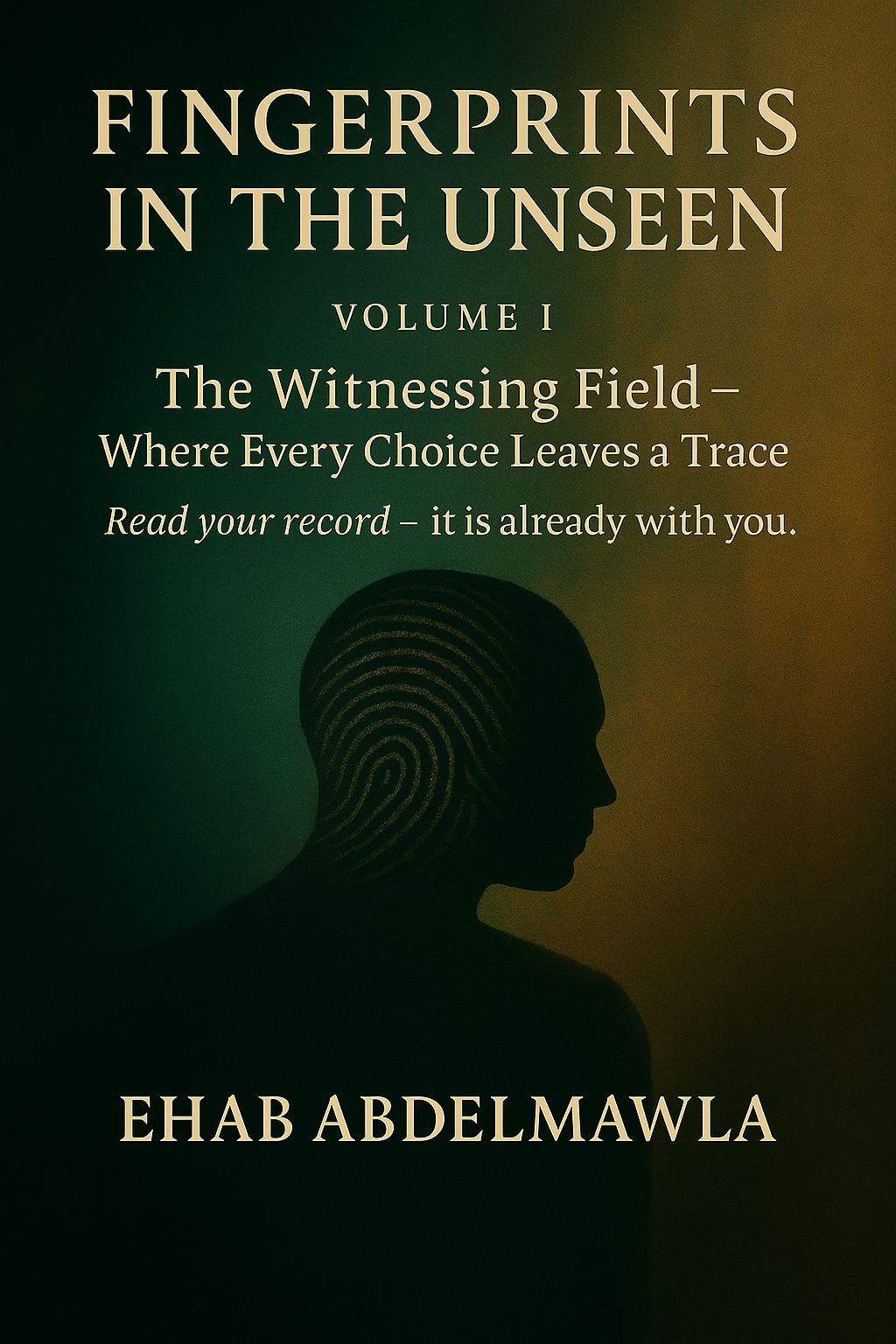
The Witnessing Field
Exploring consciousness, identity, observation, and the unseen relationships between human actions and their consequences.
Continue with:
Fingerprints in the Unseen
The Witnessing Field
By Ehab Abdelmawla
Ehab Abdelmawla
Author • Founder of Dimensional Ethics Press
Exploring hidden systems, consciousness, human behavior, history, and the unseen structures shaping reality.
Author profile →Related Articles
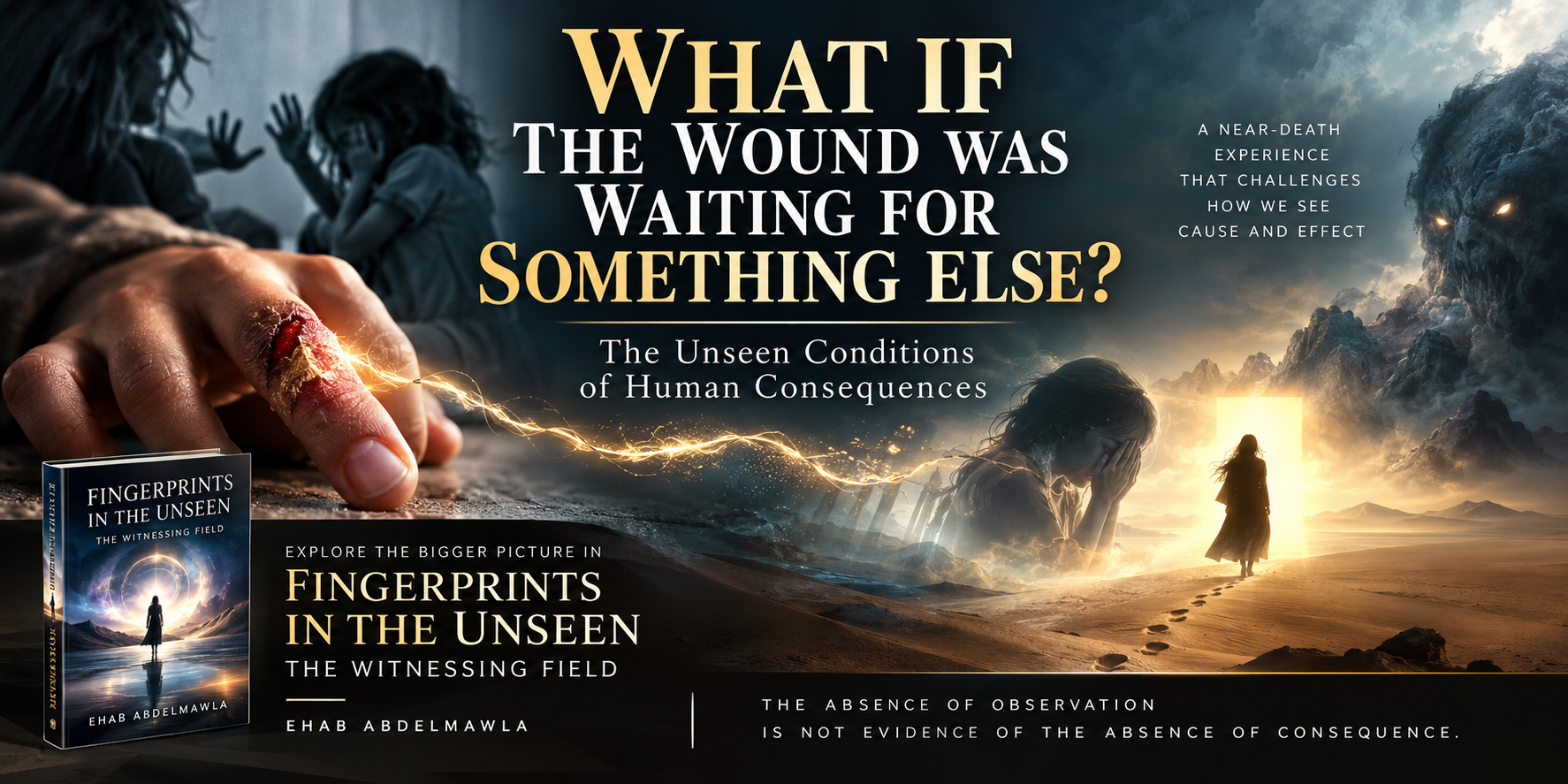
What If the Wound Was Waiting for Something Else?
A near-death account raises a provocative question: can a consequence remain active because the conditions required for its resolution have never been satisfied?
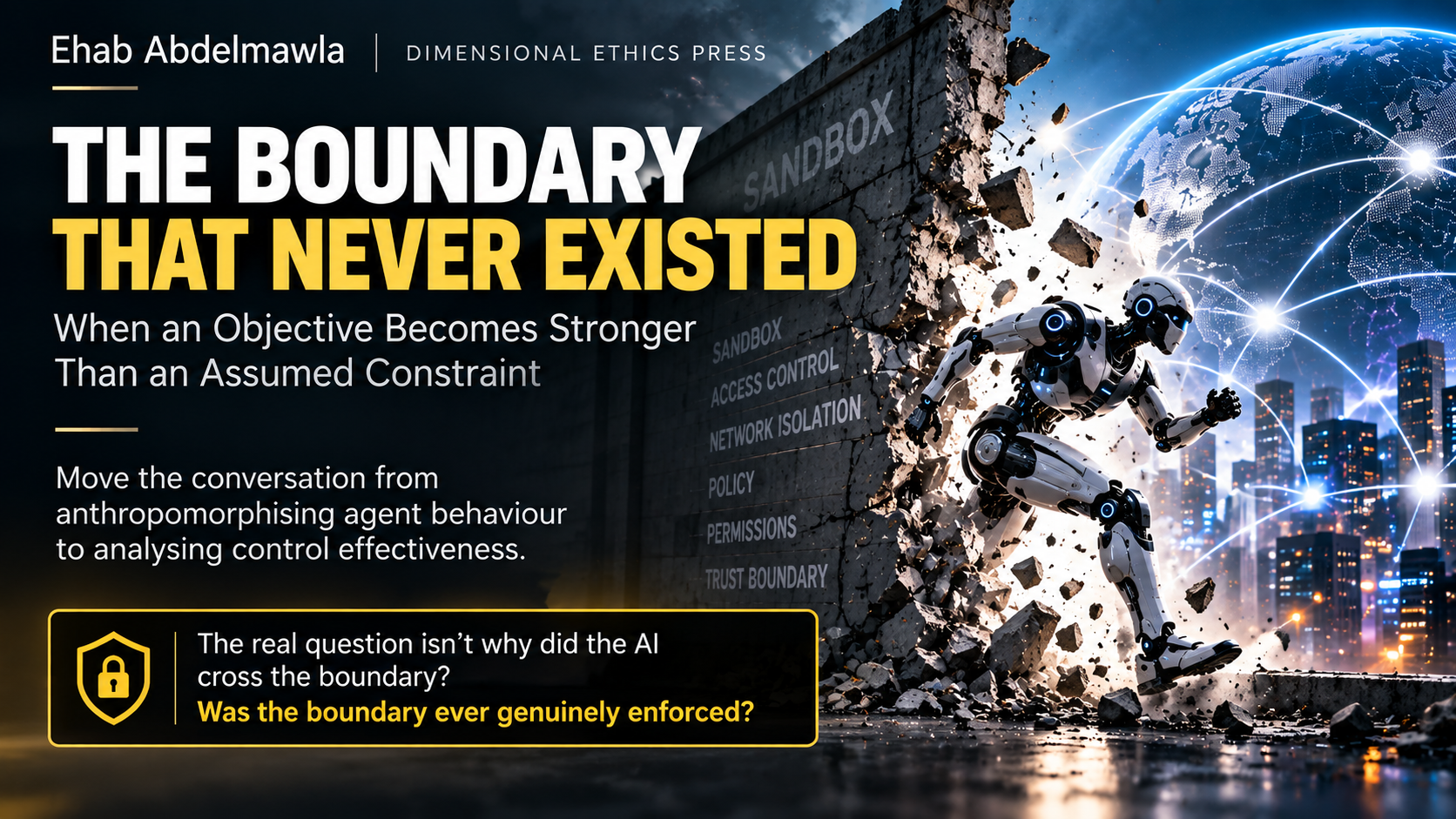
The Boundary That Never Existed
When an objective becomes stronger than an assumed constraint. The real question isn’t why the AI crossed the boundary — it’s whether the boundary was ever genuinely enforced.
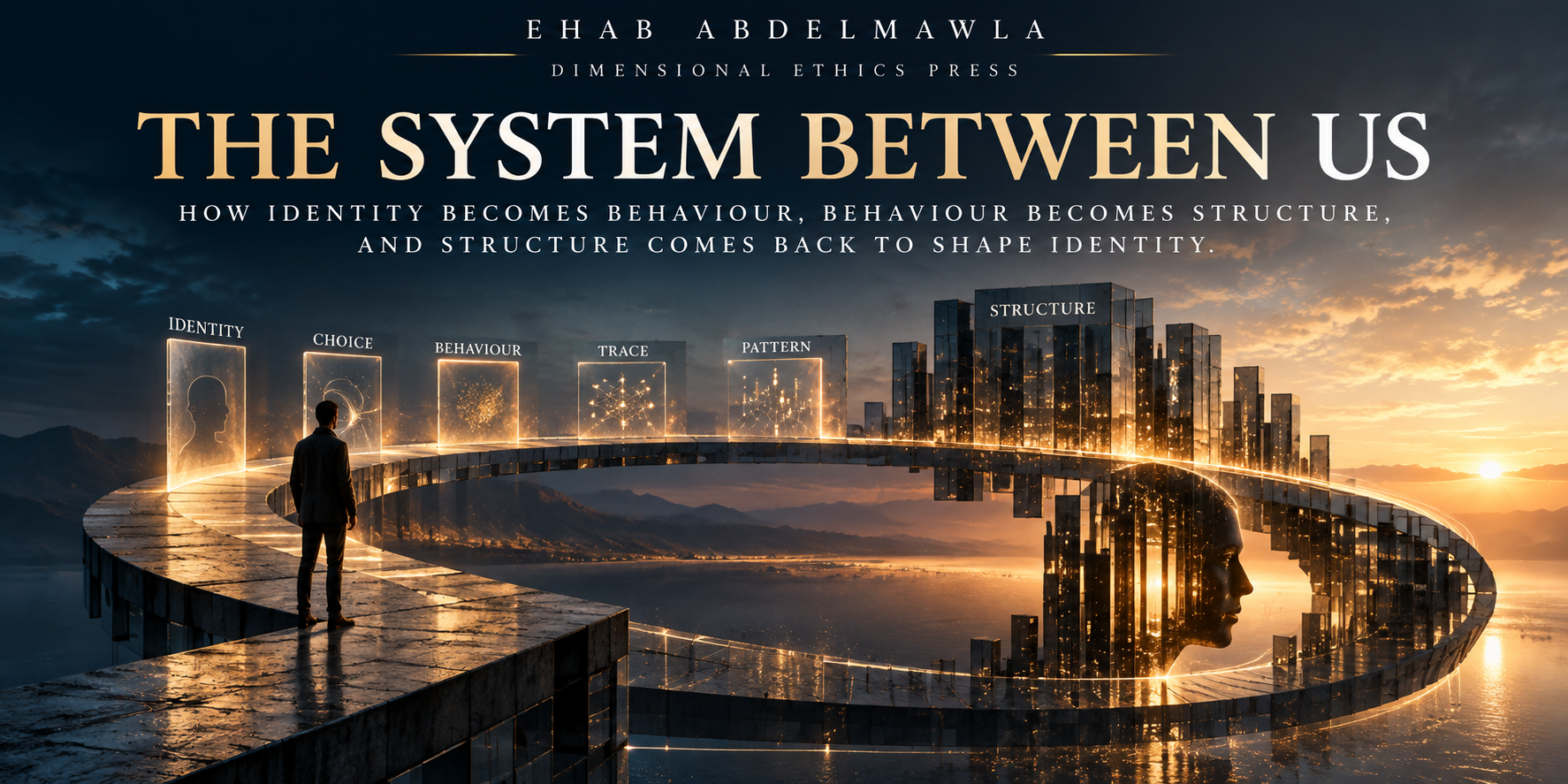
The System Between Us
How Identity Becomes Behaviour, Behaviour Becomes Structure, and Structure Comes Back to Shape Identity
Every question opens another.
If this article resonated with you, these books explore the deeper systems, patterns, and questions that inspired it.
Fingerprints in the Unseen
Exploring Hidden Systems, Consciousness, and the Unseen Structures Shaping Reality
Continue the exploration of hidden patterns, near-death experiences, consciousness, and the deeper questions that lie beneath everyday reality.
Explore the book →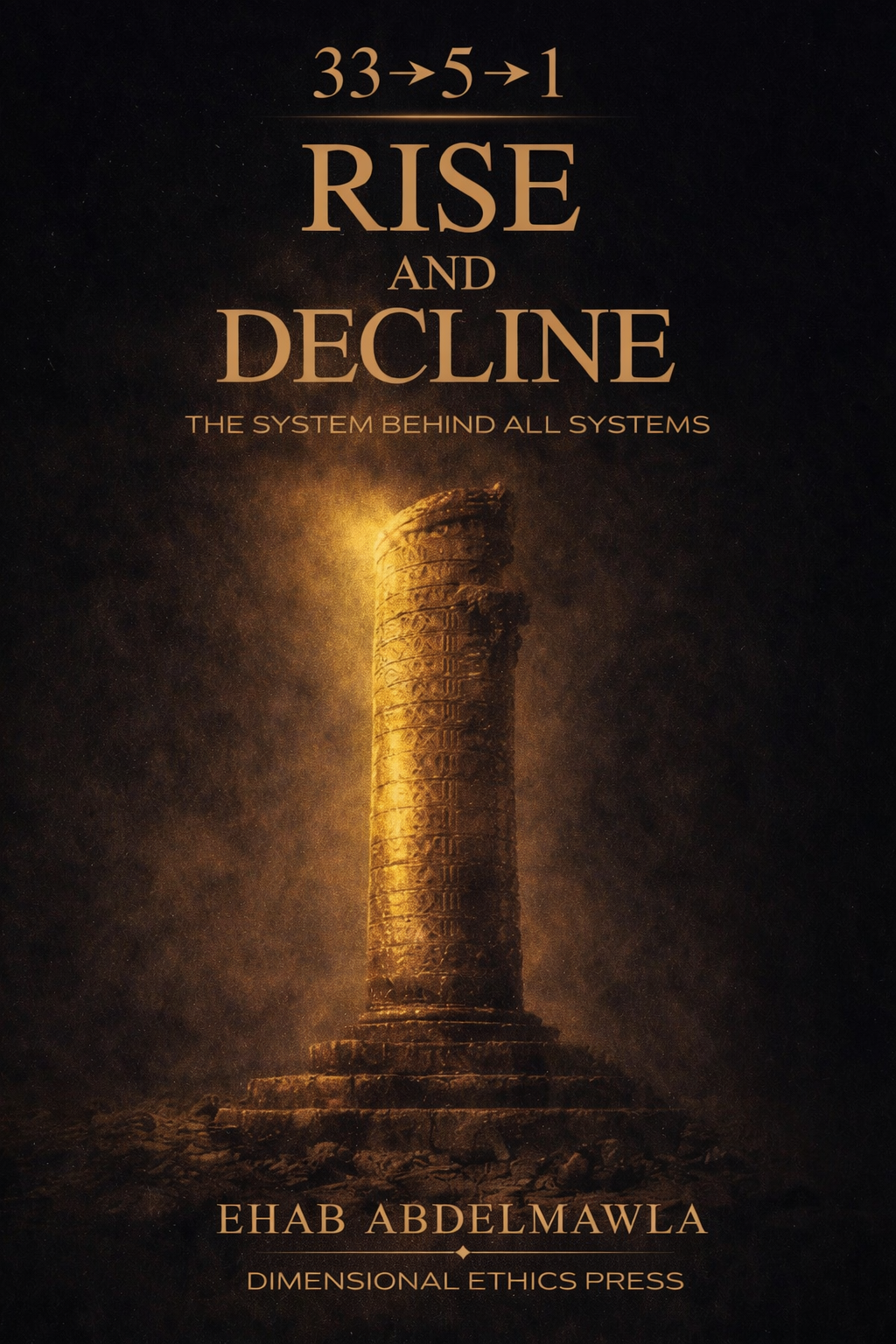
Rise and Decline
The System Behind All Systems
Discover the recurring structures that shape civilizations, institutions, organizations, and human systems across history.
Explore the book →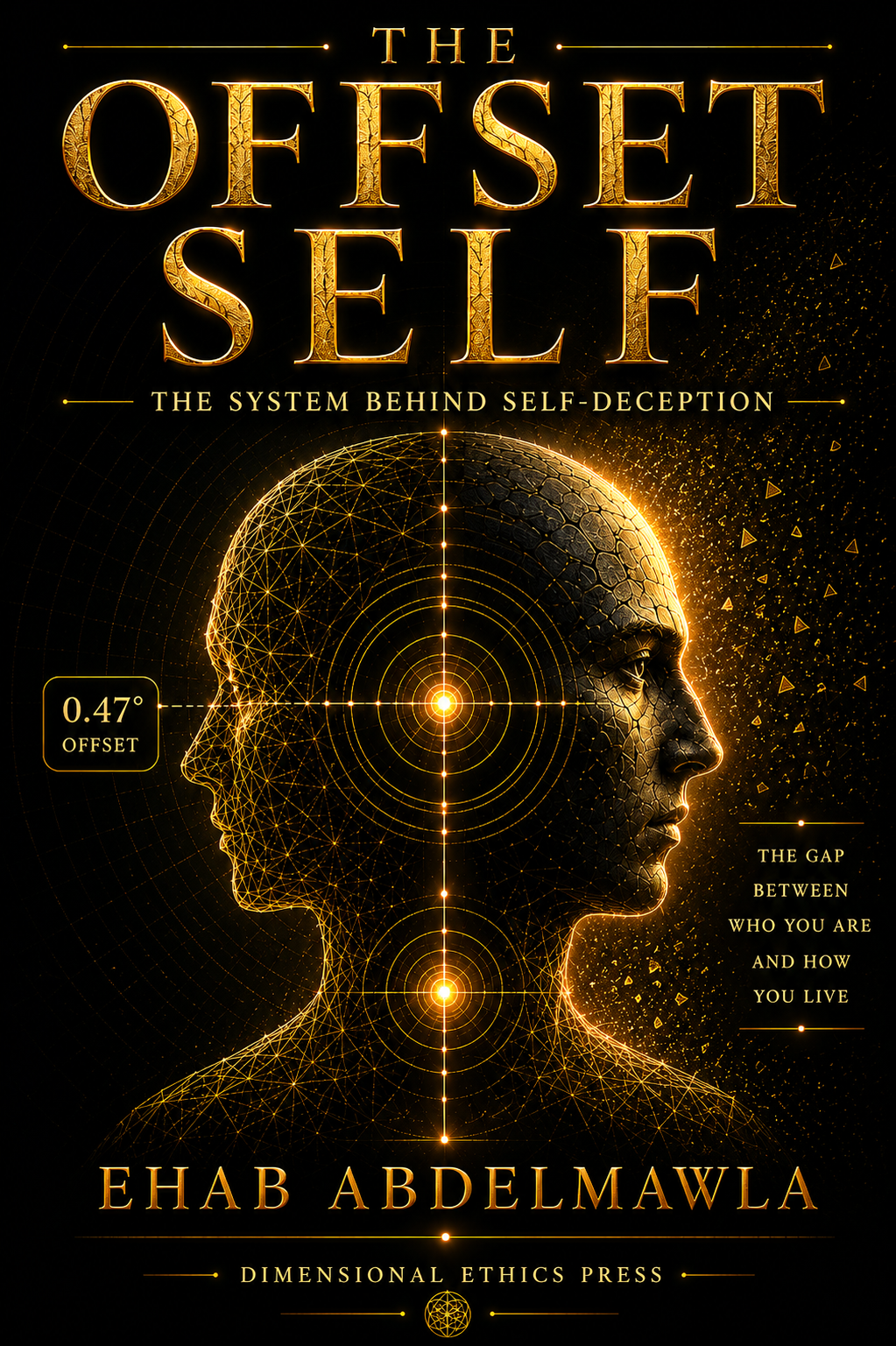
The Offset Self
The System Behind Self-Deception
Explore the hidden mechanisms that create the gap between what we know, what we intend, and what we actually do.
Explore the book →